


There was a time when I had a list of goals so long it served no purpose at all. Career goals, fitness goals, financial goals, personal development goals. The lot.
Now and then I’d look at the list, briefly feel inspired, and then do absolutely nothing towards achieving anything on there. Not because I didn’t care, I just didn’t know where to start.
What I realised eventually, it wasn’t a motivation problem, it was a clarity problem.
When Everything Is a Priority, Nothing Is
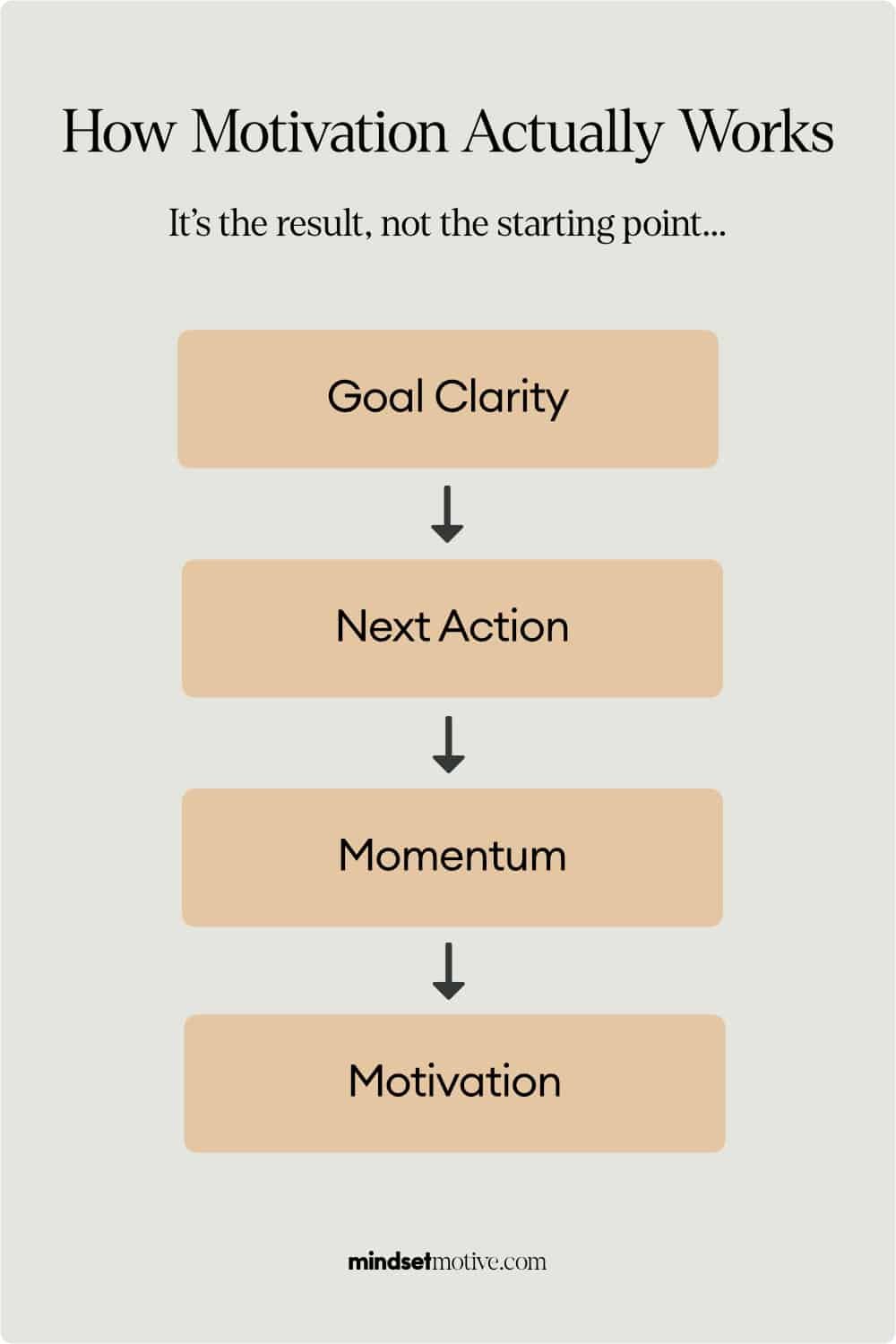
Here’s what I’ve come to understand, motivation isn’t a tap that can be turned on and off at will. It doesn’t arrive before you start, it shows up because you started. And the reason most people can’t start isn’t lack of drive, it’s that they genuinely don’t know what they’re supposed to be doing right now.
Think about it. You can be deeply motivated to get in shape, as I was at the time, and still do nothing because ‘getting fit’ isn’t an action. It’s a direction, an end goal. That doesn’t create the momentum required, clarity does.
The moment you replace ‘get in shape’ with ‘thirty minute walk before work’, Monday to Friday’, things change. This has nothing to do with suddenly finding motivation from somewhere, but because you removed the decision. It’s an action, the beginning of path that is clear, so you move.
Clarity Is a Systems Problem, Not a Motivation Problem
Most advice about goals goes straight to high-level tactics. Get up earlier. Use a planner. Try this app. Track your habits.
That won’t really work without the one thing underpinning it all, and that’s knowing precisely what you’re working toward and why it matters right now.
The most unproductive people can be those with the best plans and every tool going; particularly in corporate, I might add, but that’s another story!
That said, I’ve also seen people with nothing more than a single well-defined outcome with clear actions, quietly making progress every week.
The difference isn’t discipline, it’s definition.
The turning point for me was that I started treating goal clarity as a system rather than a feeling. In other words, I actively created rather than waiting for the right moment, and everything else got easier. The planning, the prioritising, and then the motivation came.
What Goal Clarity Actually Looks Like
This is where most goal-setting advice gets vague, which isn’t helpful. So here’s what it looks like in practice.
A clear goal has three things:
- A specific outcome: Not “grow my business” but “sign three new clients by the end of the quarter.” Not “save money” but “put $500 aside every month for six months.”
- A reason that actually matters: Not the reason you think you should have. The real one. The one that’s still there at 6am when you’d rather stay in bed.
- A next action you could do today: Not the whole plan, just the next step. If you can’t name what that is in one sentence, the goal isn’t clear enough yet
There you are, right down to the brass tacks, as they say. No complicated framework. No colour-coded spreadsheet required.
The Uncomfortable Bit
The uncomfortable truth is that clarity creates accountability.
It’s much easier to say “I’ll get healthier someday” than “I’ll walk for thirty minutes every weekday.” The first can’t really fail. The second can. That’s exactly why we avoid it.
Vagueness is protection and clarity is commitment.
Most people aren’t unmotivated. But, they might just be protecting themselves from the discomfort of a clearly defined target they might not hit.
Once I understood that, I stopped waiting to feel ready and started getting specific instead. Ok, maybe not this week. I really did mean to start running again, I just couldn’t quite manage the early morning.
Something Worth Confronting
If someone asked you right now, what exactly are you working toward, and what are you doing about it this week, could you answer without hesitating?
If the answer’s no, that’s your starting point. You don’t need a new goal, just clarity on what you already have, and everything else follows from there.